Loading the post…
17. Manhaj Benefits: Various Manhaj Benefits from the Major Scholars
A series of manhaj benefits from Shaykh Rabīʿ bin Hādī, Shaykh Aḥmad al-Najmī, Shaykh ʿUbayd al-Jābirī and Shaykh Zayd al-Madkhalī (رحمهم الله) regarding scholarly integrity, always seeking evidence and truth, avoiding bigotry, accepting the reports of the trustworthy, not restricting daʿwah affairs to one or two shaykhs and how to treat Ahl al-Sunnah and Ahl al-Bidʿah.
We praise and thank Allāh (عز وجل) for providing us with scholars of the calibre of Shaykh Rabīʿ bin Hādī, Shaykh Aḥmad al-Najmī, Shaykh ʿUbayd al-Jābirī, Shaykh Zayd al-Madkhalī (رحمهم الله) and others, all of whom authored tremendous works in methodology and have important statements and clarifications which are concise and full of important principles. With this important contribution, they have provided Ahl al-Sunnah with a solid criterion to judge the words and deeds of those who claim attachment to the Salafī methodology. This knowledge of the scholars does not die with them but remains for the ummah and provides them with milestones of truth along the path for all those who come after them.
Resources
Various Manhaj Benefits From al-Allāmah Shaykh Aḥmad al-Najmī
Various Manhaj Benefits From al-Allāmah Shaykh ʿUbayd al-Jābirī
Various Manhaj Benefits From al-Allāmah Shaykh Zayd al-Madkhalī
[A Methodical Reading of Selected Statements from Our Shaykh, Imam Rabeeʿ ibn Hadi al-Madkhali, may Allah have mercy on him]
Shaykh Abu al-‘Abbas Bilāl ibn ʿAbd al-Ghanī al-Sālimī
Episode One: “Constant silence and constant neutrality is a betrayal of the truth”
Episode Two:
Abandon Reckless Partisanship: “How Can You Leave Me?! You Doubt Me!”
Episode Three:
“It is not permissible to say: ‘This one is Salafi in creed (Aqidah) but Activist (ḥarakī) in methodology (Manhaj).’”
Episode Four: “Be with the coalition, Be with Saudi Arabia”
Manhaj Benefits Selected by
Shaykh Abū ʿAbd al-Raḥmān Fuʾād ibn Mūsā al-Tūnisī
Episode One:
The Obligation to Frequently Engage the Mistaken Adherent to the Sunnah in Discussion and Clarify the Points of Error and Misconception
In order to absolve the methodology and the Sunnah from the effects and consequences of his mistake
Episode Two:
If We Do Not Clarify the Refutation of Them With Firmness, It Will Be Deemed Authentic From Them, and Thus Something That Is Not From the Religion Will Be Attributed to the Religion
Episode Three:
When Presenting Evidence, Leave Aside the Names of Individuals
Episode Four:
For This Reason, Allah Elevated Them and Caused Their Mention to Endure
They would become jealous even over the smell of his riding animal ﷺ—so what about his followers today?!
Episode Five:
From the Way of Ahl al-Sunnah During Times of Tribulation:
The Necessity of Taking Positions of Firmness and Resolve
Episode Six:
For You to Keep Company with People Who Make You Fear Until You Attain Security Is Better Than to Keep Company with People Who Make You Feel Secure Until You Are Overcome by Fear
Episode Seven:
When Tribulations Occur, They Are Responded to With Evidence and Proofs
So That Accusations Are Repelled and the Path Becomes Clear
Episode Eight:
The Word of Truth and the Statement of Truth Are Supported
They Must Have an Effect, Even If They Are Rejected
So Purify Your Intention and Ask Allah for Sincerity
Episode Nine:
Study with Understanding, Not Blind Following — and Detailed Clarification Is the Weapon of Ahl al-Sunnah and Truth
Episode Ten:
The Permissibility of Enjoining the Good and Forbidding the Evil Against One Who Contradicts the Foundations of the Qur’an and Sunnah
Through Gentle Speech or Harsh Speech, Taking the Consequences and Outcomes Into Consideration
Episode Eleven:
Their Falling Into Error While Being People of Righteousness Necessitates Excusing Them, Not Following Them
Episode Twelve:
Let None of You Make a Man the Standard by Which He Follows His Religion
Whoever Takes an Example Should Take as His Example Those Who Have Passed Away
Shaykh Rabīʿ’s Refutation of the Chief Ḥaddādī ʿAbd al-Laṭīf Bāshmīl
Shaykh Rabīʿ’s Refutations of Fāliḥ al-Ḥarbī
Why Did Shaykh Zayd al-Madkhalī Urge the Youth to Seek Knowledge at the Height of the Manhaj Turmoil?
How a Firm Grounding in the Manhaj Steadies a Man Amid Trials, and Why the Youth Were Called to Knowledge in the Age of Strangeness
Written by:
Shaykh Fawwāz ibn ‘Alī al-Madkhalī
Silence Over Problematic Matters Is Not the Way of the People of Knowledge
Al-ʿAllāmah ʿAbd al-Raḥmān ibn Nāṣir al-Saʿdī (رحمه الله)
Endorsements Are Not Infallibility: Clear Criticism Outweighs Tazkiyah
Commentary on a Methodological Benefit by Imām Rabīʿ ibn Hādī al-Madkhalī
Shaykh Nizār ibn Hāshim al-ʿAbbās
Quṭbiyyah is a Fitnah So Know it (1994)
Shaykh Abu Iyaad Amjad Rafiq
Madārik al-Naḍhar Fi al-Siyāsah (1995)
Shaykh Abu Iyaad Amjad Rafiq
Shaykh Ibn al-ʿUthaymīn: As Students, We Used to Take the Affair of Rulership and Governance Lightly
Shaykh Abu Iyaad Amjad Rafiq
Shaykh al-Albānī: Continue In Daʿwah and Do No Let Politics Occupy You
Shaykh Abu Iyaad Amjad Rafiq
Shaykh Muqbil Bin Hādī: Legislated Politics Is Part of Religion and Cannot Be Separated From It
Shaykh Abu Iyaad Amjad Rafiq
The Rabbānī Scholars with Concern for the Daʿwah and the Youth
Shaykh ʿAlī al-Ḥudhayfī
Shaykh Ṣāliḥ Āl al-Shaykh on the Claims of the Ḥarakiyyīn and Ḥizbiyyīn That the Scholars Have Least Effect and Influence in Events and Tribulations
Shaykh Abu Iyaad Amjad Rafiq
The Recurring Pattern of Fitnah and the Wisdom of the Senior Scholars of Ahlus-Sunnah
Shaykh ʿAlī al-Ḥudhayfī
Shaykh ʿAlī al-Ḥudhayfī on the Various Tribulations Addressed by the Senior Scholars
Shaykh Abu Iyaad Amjad Rafiq
Shaykh Rabīʿ bin Hādī: All of the People of Innovation are Inclined to Rebellion (Khurūj)
Shaykh Abu Iyaad Amjad Rafiq
Fix Your Own Creed Before Criticising That of Others
Shaykh ʿAlī al-Ḥudhayfī
Everyone can call to unity and brotherhood, but those who stand for the truth and against oppression are very few
Shaykh ʿAlī al-Ḥudhayfī
On Those Who Deny the Reports of the Trustworthy and Their Testimonies Regarding ʿArafāt al-Muḥammadī
Shaykh ʿAlī al-Ḥudhayfī
Read the full response:
Original question:
Regarding the Obligation of a Scholar to Speak When Required to Do So and the Consequences of the Failure in Scholarly Duty
Shaykh ʿAlī al-Ḥudhayfī
Shaykh Rabīʿ bin Hādī (رحمه الله) on Responding to the Call to Uphold Truth, Establish Justice and Suppress Fitnah
Translated by Shaykh Abu Iyaad
Follow the Abu Iyaad SP channel on WhatsApp:
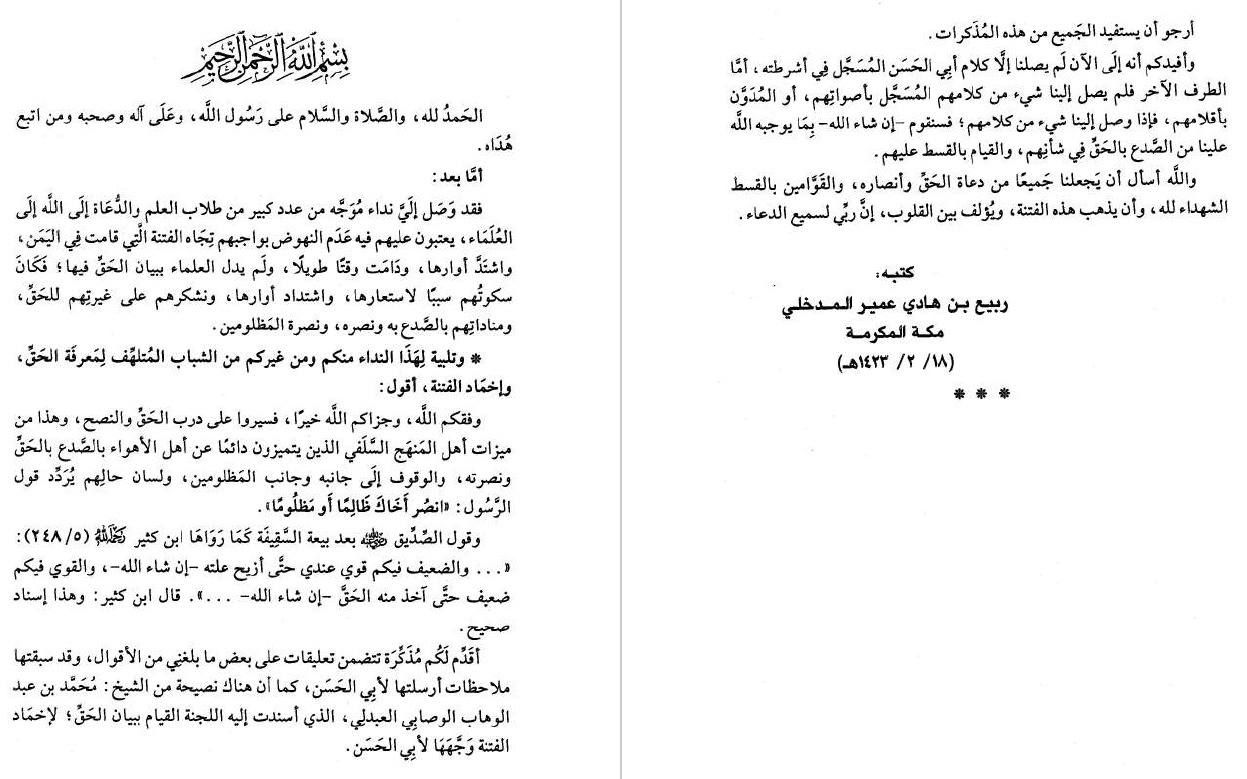
Shaykh ʿAlī al-Ḥudhayfī: O Dr. ʿArafat al-Muḥammadī, O You Who Hide Behind Pseudonyms.
Shaykh ʿAlī al-Ḥudhayfī
Shaykh al-Albānī (رحمه الله): Regarding the Matter of Whether to Maintain Silence Or Refute An Oppressor
Shaykh Abu Iyaad Amjad Rafiq
Direct download (PDF, 6 pages):
An Important Clarification Regarding the Issues Which Are Left to the Scholars and the Firm Foundations (Uṣūl) That Must be Clarified and Supported
Shaykh Nizār ibn Hāshim al-ʿAbbās
Shaykh al-Albānī: On the Necessity of Refuting the Transgressors and Liars, Holding Them to Account and Not Leaving Them Alone
Shaykh Abu Iyaad Amjad Rafiq
Shaykh Ṣāliḥ al-Fawzān: Fighting Khārijites and Rebels Is Legislated and Is Not ‘Fitnah’
Shaykh Abu Iyaad Amjad Rafiq
Shaykh Ibn ʿUthaymīn: The Obligation to Support the Ruler In Fighting Khārijites and Rebels
Shaykh Abu Iyaad Amjad Rafiq
Shaykh ʿUbayd al-Jābirī: Advice to the People of Yemen Regarding the Khārijites and Rebels and the Obligation to Support The Leader Against Them
Shaykh Abu Iyaad Amjad Rafiq
A Series of (Manhaj) Benefits by or Selected by Shaykh ʿAlī al-Ḥudhayfī
1. Shaykh Rabīʿ’s Approach to Doubts, Endless Debates, and Anonymous Partisans
2. Shaykh Rabīʿ’s Defence of Shaykh al-Albānī and the Salafi Methodology
3. The Methodology of Ahlus-Sunnah in Warning Against Individuals and Clarifying Deviations with Evidence
4. Shaykh Ṣāliḥ al-Fawzān on the Two Categories of Refutations: Beneficial and Harmful
5. Shaykh Ṣāliḥ al-Fawzān on the Fate of the Transgressing Group and the Just Group
6. Shaykh ʿUbayd al-Jābirī on Not Restricting Salafiyyah to Specific Individuals
7. Shaykh Muqbil al-Wādiʿī on the Patience and Steadfastness of Ahlus-Sunnah
8. Shaykh ʿAbd al-Salām Burjis on Those Who Outwardly Claim the Sunnah to Divide Ahlus-Sunnah
9. The Quṭbiyyūn’s Attacks on the Scholars and Their Fear of Ahlus-Sunnah’s Criticism
10. Shaykh Rabīʿ on the Quṭbiyyūn and Ḥaddādiyyah’s Attacks on Ahlus-Sunnah
11. Shaykh Rabīʿ al-Madkhalī on the Harm Caused to Islam by Sayyid Quṭb
12. Five Types of People Who Fall into Trials and Tribulations and Their Harm to the Daʿwah (Trans)
13. Shaykh Rabīʿ on the Incorrect Principle That Only a Scholar May Refute a Scholar


14. Shaykh Rabīʿ al-Madkhalī on Abandoning Blind Following and Fanaticism in Favour of the Truth
15. Abū al-Ḥasan’s Fitnah: The Danger of Fanaticism and Exaggerating Scholars’ Commendations
16. Three Types of People Who Fuel Tribulations and Two Through Whom Allah Brings Them to an End
17. Shaykh Rabīʿ al-Madkhalī on Whether Every Refutation Must Come from a Scholar Firmly Grounded in Knowledge
18. Silence Is Not Always Salvation: The Obligation to Clarify the Truth and Not Remain Silent About Falsehood
19. Shaykh Aḥmad an-Najmī on the Signs of Partisanship and the Obligation to Avoid Its People
20. Shaykh Aḥmad an-Najmī on Avoiding Excessive Argumentation and Prioritising Beneficial Knowledge
21. Shaykh Aḥmad an-Najmī on Who Is Responsible for Dividing Ahlus-Sunnah and Causing Disunity
22. Shaykh Ṣāliḥ al-Fawzān on Leaving Trials and Tribulations to the Scholars of Knowledge and Insight
23. Shaykh Muqbil al-Wādiʿī on Rejecting the Criticism of Great Scholars by Discredited Individuals
24. Opposing Clear Proofs with the Testimonies of Fanatical Laypeople and Inexperienced Students
25. The Signs of Fanaticism: Ignoring Serious Wrongdoing While Relentlessly Attacking a Man of Honour
A Series of (Manhaj) Benefits by or Selected by Shaykh Dr. ʿAbdullāh Khayrī
1. Shaykh Muqbil al-Wādiʿī: The realities will be exposed, and the confusion will disappear, no matter how hard the impostors try to obscure the truth.
Selected by Shaykh Dr. Abdullah Khayri
2. Shaykh ʿAbd al-Raḥmān al-Muʿallimī al-Yamānī: The Effect of Enmity on the Acceptance of Testimony
(Refutation of the doubt raised by Aḥmad Bādkhan and others among the tails (followers) of the “New Party,” which is their rejection of the testimonies of the Salafis, claiming that testimony whose origin is enmity is not accepted.)
Selected by Shaykh Dr. Abdullah Khayri
3. The Obligation to Assist the Ruler in Fighting the Rebels and Khawārij
[A Clarification of Asʿad al-Zaʿtarī’s Ignorance of the Foundations of the Sunnah and His Deviation from Them, and an Explanation of the Obligation of the Subjects to Assist the Ruler in Fighting the Rebels and the Khawārij]
Shaykh Dr. ʿAbdullāh Khayrī
4. Shaykh Rabīʿ al-Madkhalī’s Refutation of Abū al-Ḥasan al-Maʾribī’s Treacherous Practice of Truncating Statements and Taking Them Out of Context
(In Response to ʿArafāt al-Muḥammadī’s Distorting of Statements)
Shaykh Dr. ʿAbdullāh Khayrī
5. Al-Allāmah ʿAbd al-Raḥmān al-Muʿallimī: Some of Those Who Attribute Themselves to Knowledge Find It Difficult to Admit Their Mistakes When Someone Else Points Them Out
Shaykh Dr. ʿAbdullāh Khayrī
6. Imam Rabīʿ al-Madkhalī: Incorrect Approaches to Dealing with Disagreements That May Arise Among Ahl al-Sunnah
Shaykh Dr. ʿAbdullāh Khayrī
The People of the Sunnah Do Not Revile Their Scholars
Shaykh ʿAlī al-Ḥudhayfī
A Series of (Manhaj) Benefits by or Selected by Shaykh Fawwāz bin ʿAlī al-Madkhalī
1. Ibn Taymiyyah on Using the Fear of Fitnah as an Excuse to Abandon Obligations
2. Imām al-Ājurrī on Avoiding the Methodology of the Khawārij and Remaining Patient with the Rulers
3. Shaykh Rabīʿ al-Madkhalī on Fāliḥ al-Ḥarbī’s Manifestations of Ḥaddādiyyah
4. Shaykh Rabīʿ al-Madkhalī on Applying the Statements of the Imāms of the Sunnah Against Contemporary Ahl al-Sunnah
5. Abū al-ʿĀliyah on the Prohibition of Being Pleased with the Actions of the Oppressors
6. Shaykh Muqbil al-Wādiʿī on Politics Being Part of the Religion of Islam
7. Shaykh Rabīʿ al-Madkhalī on Accepting the Truth Regardless of Its Source and Rejecting Falsehood
8. Shaykh ʿUbayd al-Jābirī on Making Allegiance and Disavowal Revolve Around Particular Shaykhs
9. Shaykh Rabīʿ al-Madkhalī’s Warning Against Southern Yemen’s Secession and Its Potential Consequences
10. Shaykh Rabīʿ al-Madkhalī’s Insight into the Danger of Making People Attached to One Person Instead of All Scholars
11. Shaykh Rabīʿ al-Madkhalī on the Presence of Hypocrites and Heretics in Political Movements
12. Shaykh Muqbil al-Wādiʿī on the Three Pillars of Partisanship
13. Scholarly Commendations Are Conditional: Shaykh Rabīʿ al-Madkhalī and Shaykh ʿUbayd al-Jābirī on Deviation After Tazkiyah
14. Shaykh Rabīʿ al-Madkhalī on Rejecting Advice, Arrogance, and the Importance of Humility
15. Shaykh Rabīʿ al-Madkhalī on the State’s Duty to Prevent the Fragmentation of Yemeni Unity
16. Al-Ājurrī’s Warning Against Being Deceived by the Worship and Knowledge of the Khawārij
17. Shaykh Zayd al-Madkhalī on the Temporary Ascendancy of Falsehood and the Ultimate Victory of the Believers
18. Shaykh Rabīʿ al-Madkhalī on the Danger of Inexperienced Students Blocking People from Scholars
19. Shaykh Muḥammad Amān al-Jāmī on Uniting the Callers to Allah and Avoiding Partisanship
20. Shaykh Aḥmad al-Najmī on Partisanship Being an Innovation in Itself
21. Shaykh Ibn ʿUthaymīn’s Advice: Do Not Tie the Truth to Individuals
22. Shaykh Rabīʿ al-Madkhalī on Supporting Your Brother When He Is Wronged for the Sake of the Religion
23. Shaykh ʿUbayd al-Jābirī on the Two Types of Rebellion Against the Rulers
24. Shaykh Zayd al-Madkhalī on Rejecting the Judgments of Scholars Against Those Who Oppose the Methodology of the Salaf
25. Shaykh Muqbil al-Wādiʿī on Yemen’s Unity and the Divisions Caused by Deviant Politics and Desires
26. Al-Awzāʿī on the Importance of Caution and Deliberation When Issuing Fatāwā
27. Blind Imitation, False Religious Devotion, and Adherence to Evidence
28. Shaykh Zayd al-Madkhalī: Patience in the Face of Harm When Calling to Allah
Série des points bénéfiques (dans le manhaj) du Cheikh ‘Alī Al-Houdheyfi Al-‘Adani
Dévoilement des tromperies